Maryam S. Mirian
Personal Homepage
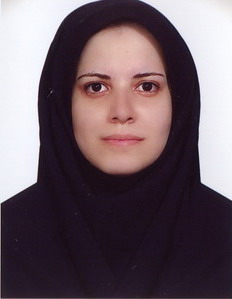


|
I took my Ph.D. in Machine Intelligence and Robotics from Faculty of Engineering, University of Tehran, under the supervision of my advisors: Dr. Majid Nili Ahmadabadi and Dr. Babak Nadjar Araabi and my dear Co-advisor Prof. Caro Lucas from his death we can never get over. Here is My Ph.D. Thesis and its Presentation (in FARSI) I am currently working as a ML Research Scientist at the University of British Colombia, Vancouver, BC, Canada. Here is my CV |
|
My Linkedin Profile: here! My Google Scholar Page: here! My Researchgate Profile: here! |
| My Ph.D. thesis is titled: “A Framework for Learning Attention Control in Tasks with Multi-dimensional Perceptual Space” |
|
In my Ph.D. research, a learning framework called ADFL (Active Decision Fusion Learning), for active fusion of decisions is proposed. Each decision maker –called local decision maker– provides its suggestion in the form of a probability distribution over all possible decisions. The goal of the system is to learn active sequential selection of the local decision makers to consult with thus to learn the final decision based on the consultations. These two learning tasks are formulated as learning a single sequential decision making problem in the form of a Markov Decision Process (MDP) and a continuous reinforcement learning method is employed to solve it. The states of this MDP are decisions of the attended local decision makers and the actions are either attending to a local decision maker or declaring final decisions. The learning system is punished for each consultation and wrong final decision while it is rewarded for correct final decisions.This results in minimizing the consultation and decision making costs through learning a sequential consultation policy where the most informative local decision makers are consulted and the least informative, misleading and redundant ones are left un-attended. This framework has been applied in two different applications: online learning in robotics domain and offline supervised learning in classification and recognition. |
| In the area of online learning, a unified framework named “Mixture of Experts Task and Attention learning” is proposed which contains three consecutive learning phases. The results reveal that the robot has been able to learn the driving task with a limited number of attention shifts. |
| To evaluate the framework in the area of recognition, we have applied it on a number of classification problems of UCI machine learning repository. The approach can surpass well-known benchmarks in both areas of ensemble-based learning and decision fusion. |
| I am specifically interested in: |
|
| I am generally interested in: |
|
| Last but not Least, I am the proud and lucky mom for my little daughter, Saba! :) |